

Light, in real time.
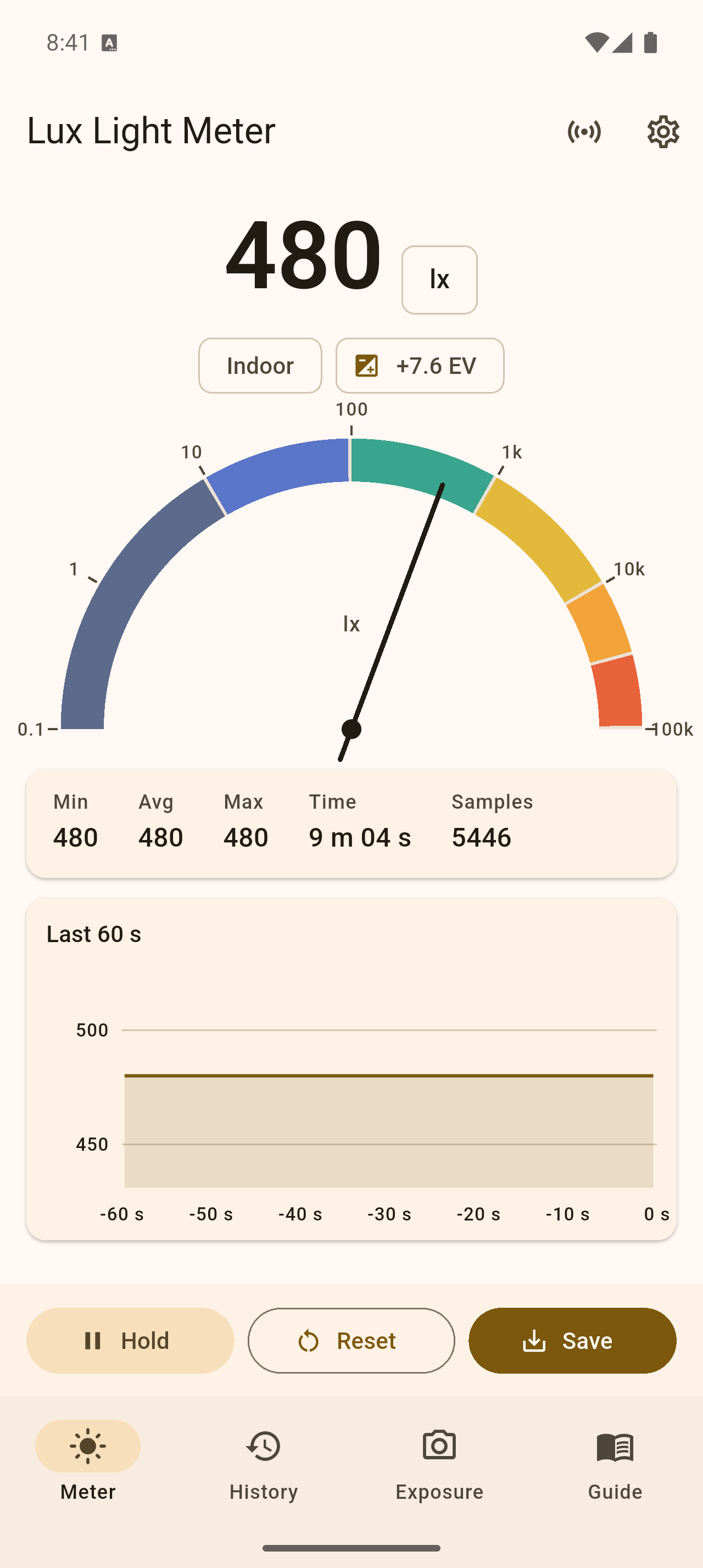
Read lux or foot-candles, see exposure value at ISO 100, and understand your surroundings with a logarithmic gauge.
ILLUMINANCE · EXAMPLE
480lx
DarkIndoorSunlight
Everyday light, made understandable. luxLIGHT METERTry the demo
Turn your Android phone into a light meter. Measure, understand, and record the light around you.
 Your phone’s real light sensor
 Offline. Private. No account.
 Measure, save, and export
 Built-in exposure tools
Light shapes your space.
Understand it. Make it yours.
From your first reading to your next decision, everything you need to make sense of light.
Read lux or foot-candles, see exposure value at ISO 100, and understand your surroundings with a logarithmic gauge.
Follow a live chart over 30 to 300 seconds. Track minimum, maximum, and average. Hold a moment or reset for a fresh session.

Save readings with notes and named locations. Revisit session charts, filter your history, and share individual records or everything as CSV.
 Studio windowAfternoon · Sheer curtains closed480 lx
Calibrate against a reference meter. Adjust smoothing, choose a theme, set threshold alerts, or keep the screen awake while measuring.
A focused meter up front. A world of useful detail just a tap away.
A large, clear reading. A gauge that spans dim rooms to daylight. Your session statistics and live chart, together in one place.
Move the slider or choose a scene. See how light levels translate into lux, foot-candles, and exposure value.
An interactive example, using simulated values. This website does not access your device’s light sensor. Reference ranges are indicative.
LIGHT EXPLOREROffice desk
480 lx is within the typical 300–500 lx range for office screen work.
A small tool for the spaces you live in, the things you grow, and the images you create.
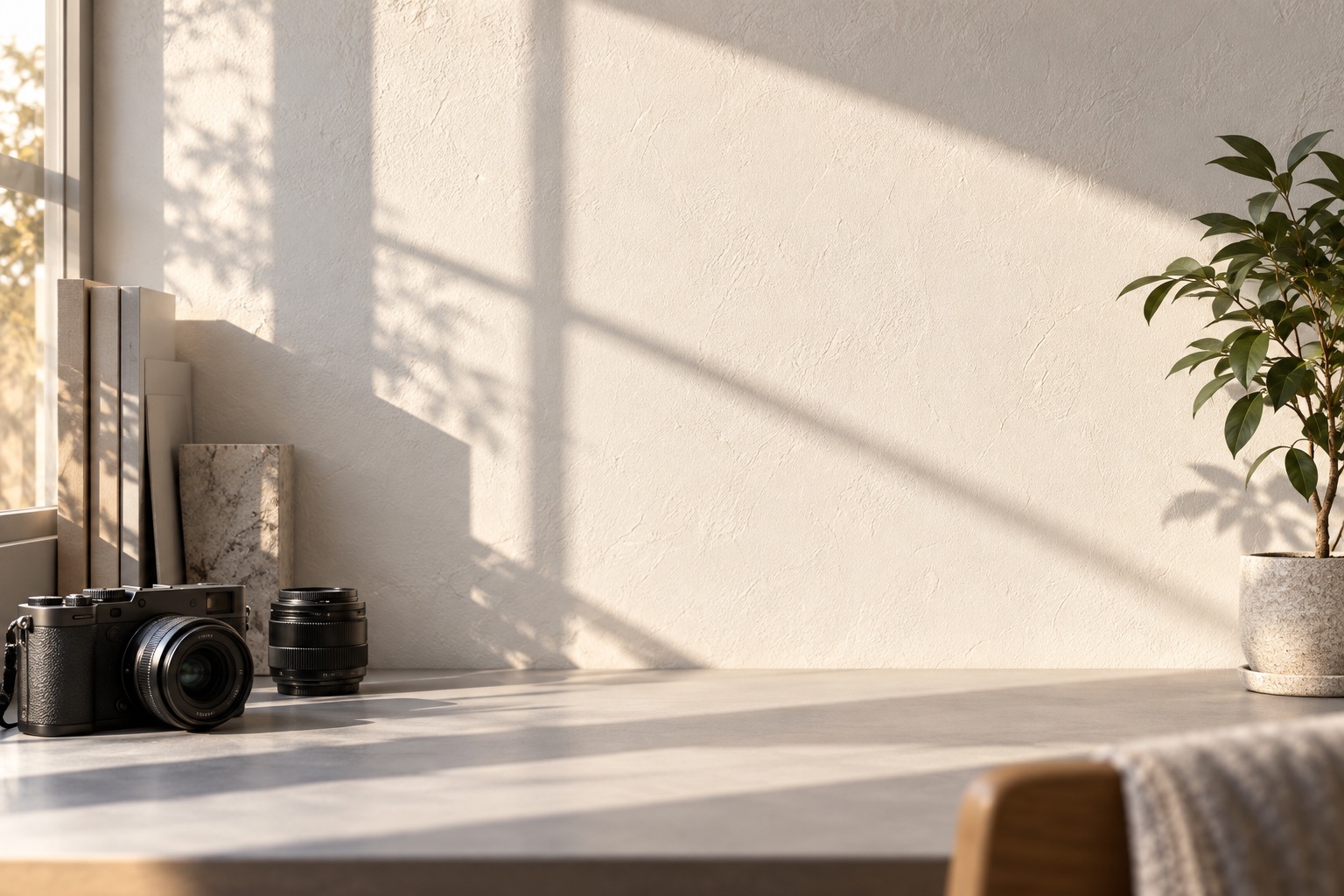
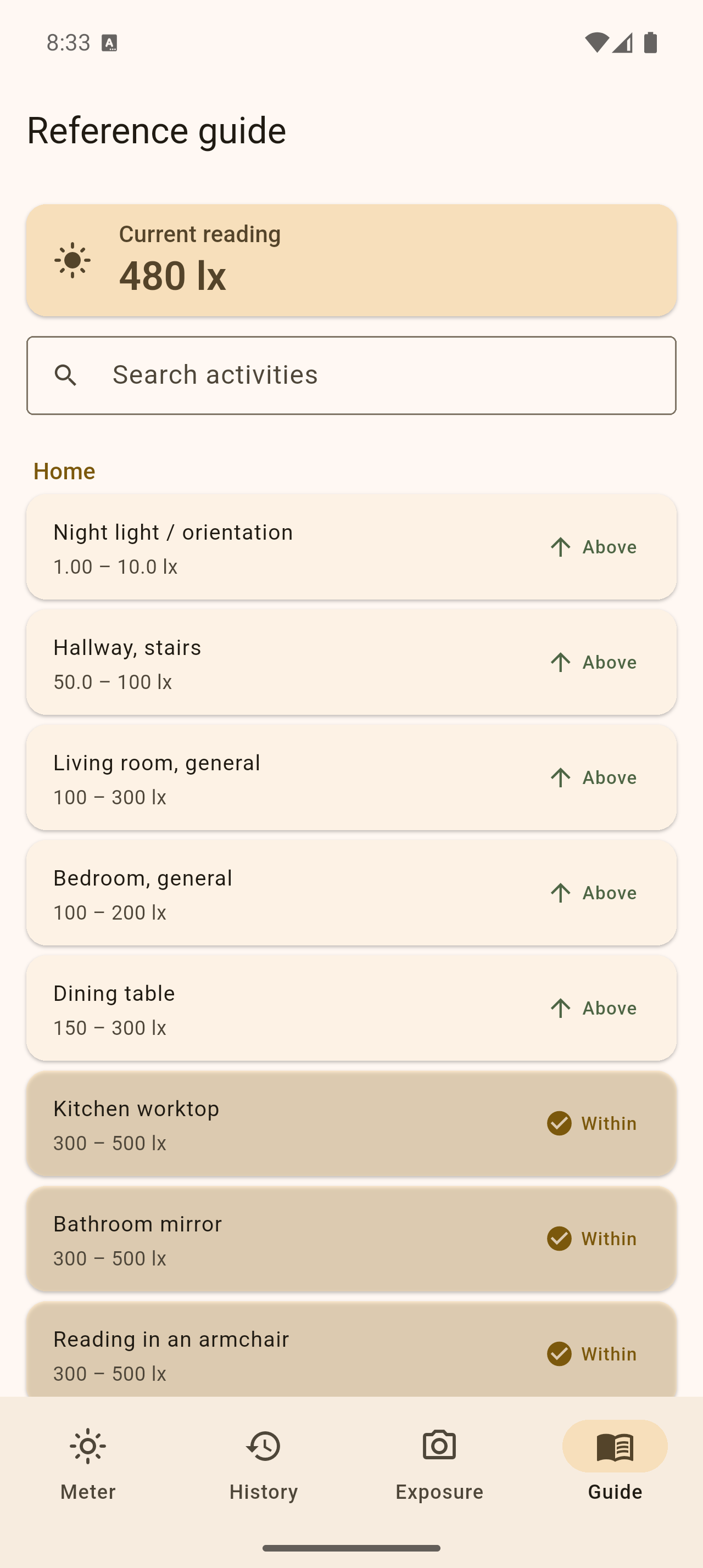
Compare your desk, kitchen, or reading corner with typical light levels. See what changes when you move a lamp.
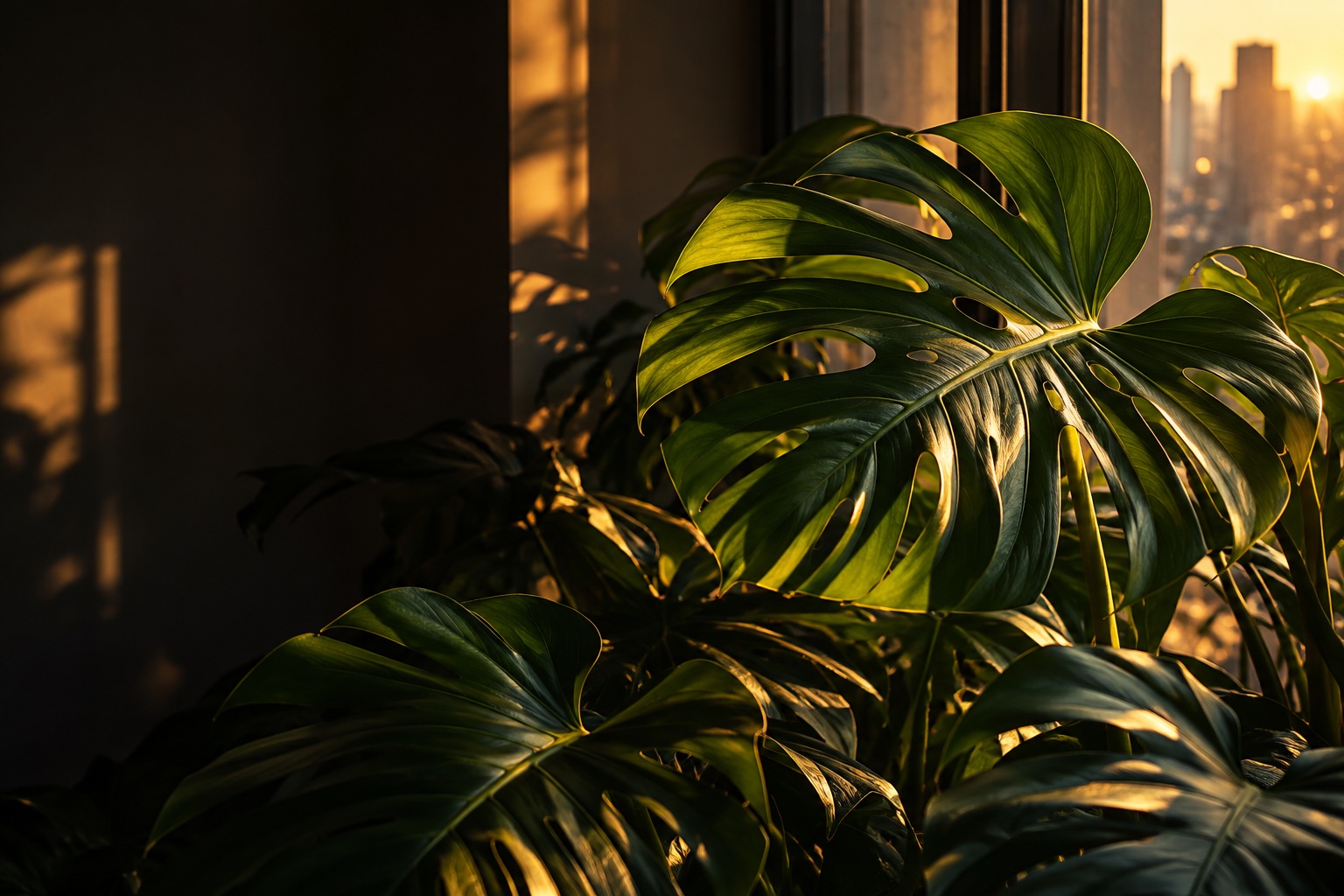
Compare windows and shelves. Save readings by location to understand the light your plants receive.
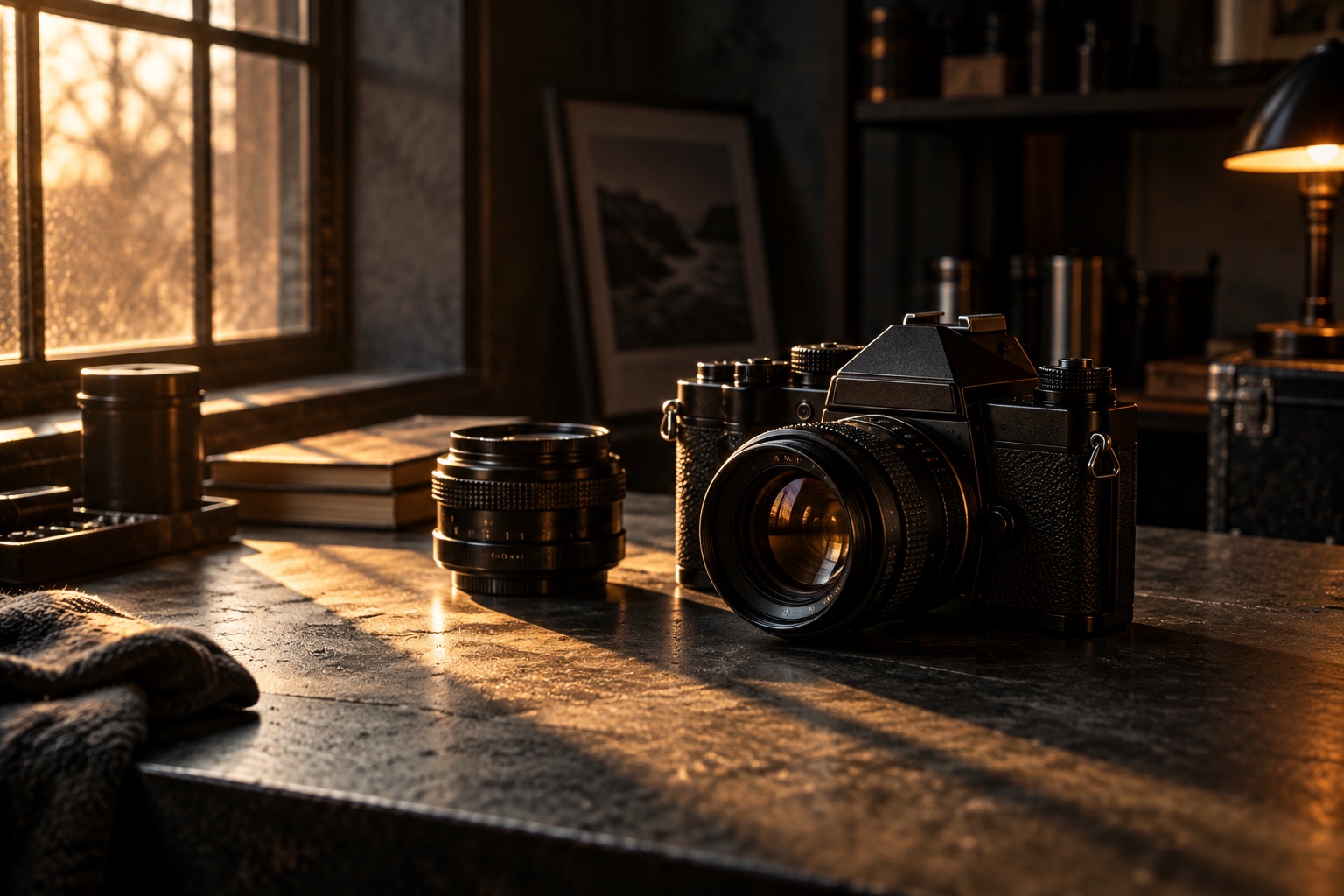
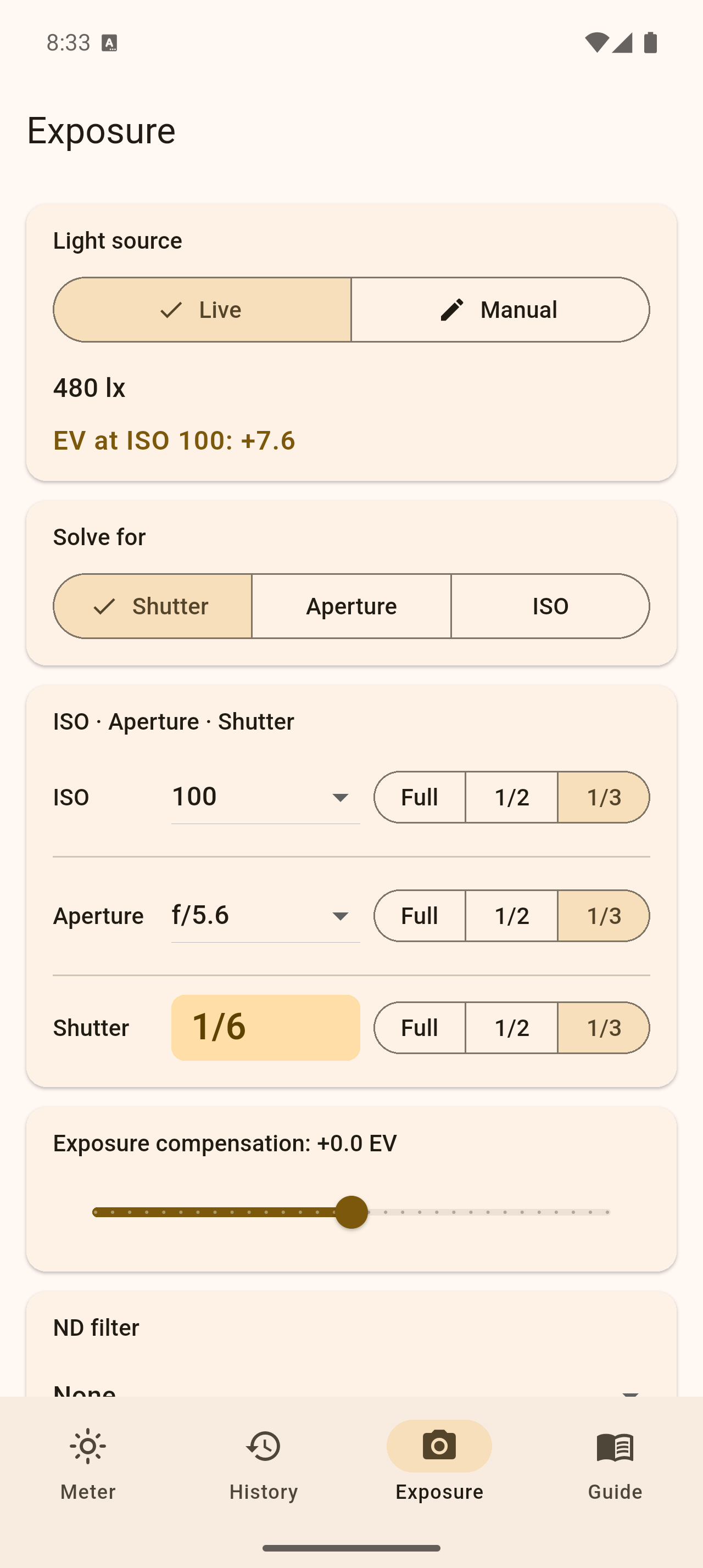
Calculate camera settings from live or manual readings, with compensation, ND filters, and video shutter angle.
Document readings with notes and locations. Export them for comparison, review, or a spreadsheet.
The built-in exposure calculator solves shutter speed, aperture, or ISO from your live reading or a manual input.
A practical starting point for your camera.
Incident-light calculations are based on the phone’s sensor. Camera-based reflective metering is not included.
No setup ritual. No account. Just your phone and the light in front of you.
Open Lux on a compatible Android device. Keep its ambient light sensor uncovered and face it toward the light.
Let the value settle. Switch units, compare the guide, or tap Hold to freeze the display while you inspect it.
Save a reading with a note and location. Revisit its chart later, or export it as CSV when you need it.
Lux works entirely offline. Measurements stay on your device and leave only when you choose to export them.
 No accountsNo ads or analyticsNo cloud uploadsNo runtime permissions
Clear answers, before you start measuring.
Live metering is designed for Android 7.0 and above on phones and tablets with an ambient light sensor. Sensor availability, range, and resolution vary by device. If no sensor is available, Lux explains the limitation; history, manual exposure calculations, and the reference guide remain usable.
Phone light sensors are not calibrated instruments. Glass, sensor placement, and the light source all affect the result, so readings are indicative. The reference-meter wizard can help you calibrate against a dedicated meter. Use a professional calibrated instrument for certified or compliance measurements.
No. Lux measures incident light using the phone’s ambient light sensor. The exposure calculator uses that reading or a manual value; it does not provide camera-based reflective metering.
Live light metering is an Android feature. iOS does not expose a public ambient light sensor API, and an iOS product is outside the current release scope.
Save the reading, session minimum, maximum, average, samples, and calibration factor, with an optional note and location. Each record includes up to one hour of session samples. Export a single record with its samples, or all saved records as a CSV summary through your phone’s share sheet.
The guide provides typical, indicative ranges for home, work, public spaces, outdoor conditions, and plants. It marks your reading as below, within, or above each range. These ranges provide context and are not a substitute for a lighting design assessment or a plant-specific care guide.
The Android app has been implemented and verified in the emulator. Release signing and the Play Store listing are the next steps. This showcase does not currently link to a public store release.
Meet your everyday light companion.
Built for Android. Made to keep things simple.
Android app · Play Store release in preparation